
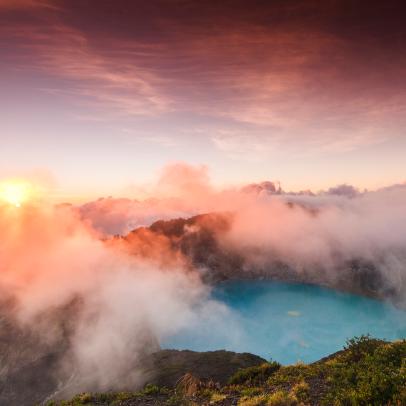
In the heart of Flores Island rises the extraordinary Mount Kelimutu, a volcanic wonder located in Ende, East Nusa Tenggara, Indonesia. Standing at 1,639 meters above sea level, this volcano is not renowned for its height but for something far more astonishing: three crater lakes with dramatically different and ever-changing colors.
The phenomenon has inspired both scientific fascination and mystical interpretation. Many locals believe that the shifting colors of Lake Kelimutu are not random geological processes, but omens reflecting the condition of the nation or the surrounding region. Is this belief symbolic, spiritual, or grounded in observable natural activity? We explore the full truth behind this captivating mystery.
The Three Sacred Lakes of Kelimutu and Their Spiritual Meaning
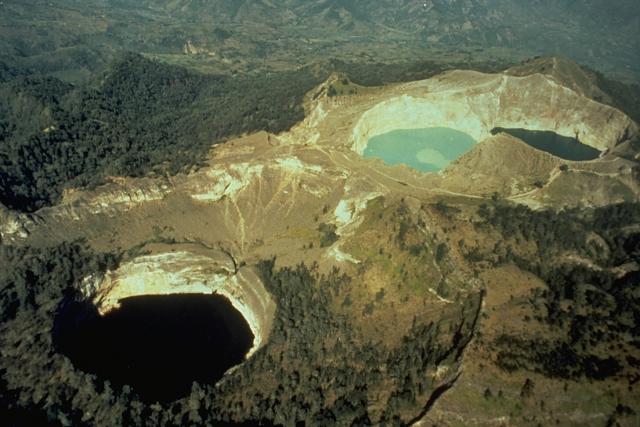
At the summit of Mount Kelimutu lie three crater lakes, each with its own name and spiritual significance according to the indigenous Lio tribe.
Tiwu Ata Mbupu – The Lake of the Elders
Typically appearing dark blue or deep indigo, Tiwu Ata Mbupu is believed to be the resting place of the souls of wise elders who lived virtuous lives. The darker hue gives the lake a solemn and dignified presence, reinforcing its spiritual symbolism.
Tiwu Nuwa Muri Koo Fai – The Lake of Young Souls
Often seen in turquoise, light blue, or green, this lake represents the souls of young people. Its brighter tones convey youthfulness and vitality, yet its color is just as unpredictable as the others.
Tiwu Ata Polo – The Enchanted Lake
Known for its dramatic shades of deep red, brown, or even dark green, this lake is associated with souls believed to have committed wrongdoing during their lifetime. The bold coloration makes it the most visually striking and frequently discussed among visitors.
The spiritual narrative surrounding these lakes has endured for generations. For the Lio community, these are not mere bodies of water; they are sacred realms bridging the physical and spiritual worlds.
The Scientific Explanation Behind Kelimutu’s Color Changes
The dramatic color transformations of Lake Kelimutu are rooted in complex geochemical processes. Scientists identify the phenomenon as a result of oxidation-reduction reactions involving dissolved minerals and volcanic gases.
Key Factors Influencing the Color Shifts
Mineral Content – Elements such as sulfur, iron, copper, and manganese dissolve in the water.
Volcanic Activity – Continuous minor volcanic emissions from beneath the crater introduce chemical compounds into the lakes.
Oxidation Process – Interaction between minerals and atmospheric oxygen alters the chemical composition.
Water Temperature Fluctuations – Temperature changes accelerate chemical reactions.
Microbial Activity – Algae and microscopic organisms contribute to subtle variations in color.
The combination of these factors creates a dynamic system where the lakes may change color unpredictably, sometimes several times within a few years.
Between 2014 and 2016, for instance, Tiwu Ata Polo shifted from its characteristic red to a dark green, while Tiwu Nuwa Muri Koo Fai changed from light green to a bone-white tone. These transformations confirm that Mount Kelimutu functions as an active geological laboratory, continuously evolving beneath the surface.
Are the Color Changes a Sign of National Events?
For generations, local communities have interpreted sudden or dramatic color shifts as signals from ancestors. When a lake turns unusually dark or murky, some believe it foreshadows major social or political events.
Historically, people have drawn connections between color changes and national developments. While no scientific evidence supports a direct correlation, the belief persists because of the lakes’ unpredictable timing and emotional impact.
This cultural interpretation reflects how deeply intertwined nature and spirituality are within Indonesian heritage. The lake becomes not only a geological marvel but also a symbolic mirror of collective consciousness.
Mysterious Sounds and the Endemic Garugiwa Bird
Visitors and researchers have occasionally reported hearing mysterious murmuring sounds emanating from the crater, described as resembling a distant marketplace crowd. Scientifically, these sounds are explained as wind resonance echoing against steep crater walls.
However, local belief holds that these are the voices of the souls inhabiting the lakes.
Mount Kelimutu is also home to the endemic Garugiwa bird, often referred to as the “spirit bird.” Remarkably, this bird can imitate up to 11 different bird calls, enhancing the mystical atmosphere at the summit. Its presence further strengthens the spiritual identity of Kelimutu in local tradition.
The Sacred Ritual of Pati Ka Du’a Bapu Ata Mata
Every year on August 14, the Lio community performs the sacred ritual known as Pati Ka Du’a Bapu Ata Mata. Hundreds of residents hike to the summit carrying offerings such as:
Pork
Betel leaves and areca nuts
Yellow rice
The ritual is a ceremonial feeding of ancestral spirits, asking for protection, peace, and prosperity. The harmonious integration of tradition and conservation highlights the profound emotional connection between the people of East Nusa Tenggara and Mount Kelimutu.
Kelimutu National Park and Environmental Conservation
Mount Kelimutu is protected within Kelimutu National Park, a conservation area facing significant environmental challenges.
Major Conservation Issues
Rising tourism numbers affecting cleanliness and habitat stability
Climate change influencing rainfall patterns
Chemical shifts in lake water due to environmental variations
Despite these challenges, strict conservation policies continue to safeguard this unique ecosystem.
The national significance of Kelimutu was further recognized when its image appeared on the 1992 Indonesian 5,000 Rupiah banknote, solidifying its status as a national icon.
Why Kelimutu Is Unlike Any Other Crater Lake in the World
Mount Kelimutu is frequently called “The Three-Colored Lakes of Indonesia.” What sets it apart globally is the rare geological condition allowing three separate crater lakes at one summit to display entirely different colors simultaneously.
Few volcanic systems worldwide demonstrate this phenomenon with such intensity and variability. The interaction between volcanic gases and mineral-rich waters creates a visual spectrum that does not follow seasonal patterns, making Kelimutu a truly singular destination.
Because of its exceptional geological and ecological value, there have been initiatives to nominate Kelimutu National Park for UNESCO World Heritage recognition.
Balancing Tourism and Sacred Heritage
Tourism growth has elevated Kelimutu’s global profile, placing it alongside other iconic destinations in East Nusa Tenggara. However, preserving its sacred and ecological integrity requires careful management.
We recognize that sustainable tourism is essential to maintaining:
The tranquility of endemic wildlife habitats
The purity of crater waters
The continuity of indigenous rituals
Protecting Kelimutu ensures that future generations can witness its color transformations while respecting its spiritual dimension.
The Deeper Meaning Behind the Changing Colors
Whether interpreted through geology or spirituality, Lake Kelimutu’s shifting colors symbolize transformation and humility. Standing at the crater’s edge at sunrise, watching gradients of blue, green, red, and white blend with the sky, we are reminded that nature communicates in its own language.
The lakes do not change to signal political headlines. They change because the Earth is alive beneath them. Yet the emotional resonance they evoke transforms natural chemistry into cultural meaning.
Mount Kelimutu is not merely a travel destination. It is a convergence of science, heritage, myth, and national identity. Its beauty challenges logic, and its mystery invites contemplation.
The question of whether the changing colors signify the condition of the nation may not demand a scientific answer. What remains undeniable is that Kelimutu reflects the enduring relationship between Indonesia’s land and its people.
Posting Komentar